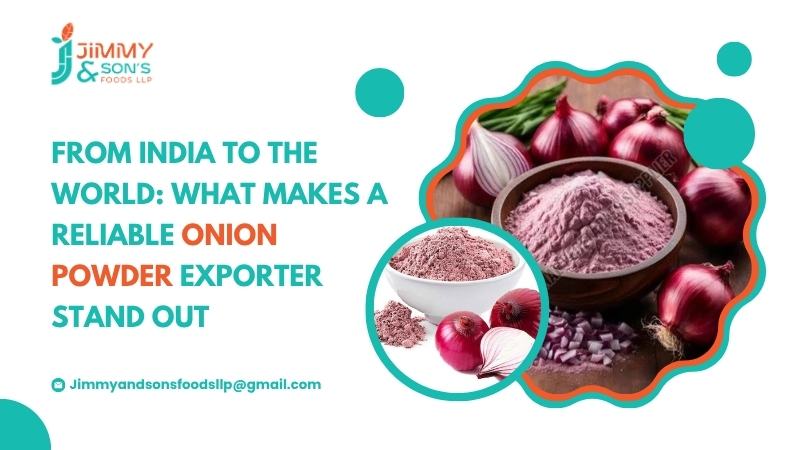
India is one of the world’s major onion-producing countries, making it an important source for onion-based food ingredients. For food manufacturers, importers, distributors, and spice businesses, Indian onion powder can be a practical ingredient for a wide range of products.
But finding an Onion Powder Exporter is only the beginning.
For international buyers, the bigger question is whether the supplier can provide consistent quality, reliable supply, proper packaging, accurate documentation, and products that match the agreed specifications.
A low price may look attractive at first, but consistency matters more when onion powder is being used regularly in food production. A reliable Indian supplier should make the buying process clear from the first sample to the final shipment.
What Should You Look for in an Onion Powder Exporter?
Not every supplier follows the same sourcing, processing, testing, or quality-control practices. Before placing a bulk order, buyers should look at several factors instead of comparing prices alone.
Key points include:
- Quality of raw onions
- Processing and dehydration methods
- Moisture control
- Product specifications
- Food safety practices
- Laboratory testing
- Packaging quality
- Batch consistency
- Export documentation
- Production capacity
- Lead time
- Communication and support
The supplier should also provide clear information about the product before the order is confirmed. This may include mesh size, moisture, colour, flavour, packaging format, shelf life, storage conditions, and microbiological specifications.
According to FSSAI standards, powdered onion has a maximum moisture requirement of 5% under the applicable Indian standard for dehydrated onion products. Buyers should also confirm the specifications required by their destination market and intended application.
Quality Starts With the Onion
Good onion powder starts with suitable raw material. The quality and condition of onions used for processing can influence the colour, aroma, flavour, moisture level, and overall characteristics of the finished powder.
A responsible Onion Powder Exporter should have a defined process for sourcing and inspecting onions before they enter production.
Raw onions may be checked for:
- Physical damage
- Foreign matter
- Contamination
- Disease
- Unwanted odour
- Overall suitability for processing
India has several major onion-producing regions, including Maharashtra, Madhya Pradesh, Karnataka, Gujarat, Rajasthan, and others. This broad agricultural base supports a large onion supply chain. However, having access to onions is not enough. The supplier must also have suitable processes to turn the raw material into a consistent finished ingredient.
Processing Has a Direct Impact on Product Quality
Onion powder is made by removing moisture from onions and processing the dehydrated material into a powder. The stages may include cleaning, preparation, cutting, dehydration, grinding, sieving, testing, and packaging.
Each stage can affect the final product. For example, moisture control is important because excess moisture can affect storage stability and the physical behaviour of the powder. Particle size can also matter depending on how the buyer intends to use the product.
A food manufacturer may require a particular mesh size for seasoning blends, sauces, snacks, instant foods, soups, or other formulations. This is why buyers should confirm the exact specification before production begins.
Ask About Product Specifications
Before ordering, ask the supplier for a written specification covering relevant parameters such as:
- Moisture
- Mesh size
- Colour
- Aroma
- Flavour
- Ash
- Microbiological limits
- Packaging
- Shelf life
Having an agreed specification gives both sides a clear reference for the order.
Testing Is an Important Part of Quality Control
A supplier’s quality statement becomes more useful when it is supported by testing. Depending on the product and destination market, onion powder may be tested for parameters such as moisture, ash, microbiological quality, pesticide residues, heavy metals, and other buyer-specific requirements. A buyer should ask what testing is performed and whether a Certificate of Analysis (COA) can be provided.
The COA should relate to the relevant product batch and report the parameters agreed with the buyer. This gives importers and food manufacturers a clearer way to check whether the product matches their purchasing requirements.
Samples Should Be Tested Before Bulk Orders
Requesting a sample is a simple step that can prevent problems later. Buyers can assess the sample for appearance, colour, aroma, flavour, particle size, and performance in their own application.
For food manufacturers, testing the powder in the actual recipe can be particularly useful. A powder that looks suitable on its own may behave differently when combined with other ingredients.
Food Safety Should Not Be Overlooked
Onion powder is a food ingredient, so hygiene and contamination control are important throughout production.
A reliable supplier should have appropriate procedures covering:
- Employee hygiene
- Equipment cleaning
- Pest control
- Foreign-material control
- Storage
- Packaging
- Batch identification
- Product handling
Buyers should ask questions rather than relying only on general claims such as “premium quality” or “export quality.” Ask how products are tested, how batches are identified, and what procedures are followed if a quality problem is reported. This provides a much clearer picture of the supplier’s quality system.
Packaging Matters During International Shipping
Good onion powder can still be affected by poor packaging. During international transportation, the product may experience different temperatures, humidity levels, handling conditions, and storage environments.
Packaging should therefore protect the powder from moisture, contamination, and physical damage. Depending on the order and buyer requirements, packaging may include food-grade bags, liners, sacks, drums, or other suitable formats.
| Buyer Requirement | What to Confirm With the Supplier |
| Product quality | Specification and COA |
| Powder consistency | Mesh size and processing details |
| Food safety | Testing and hygiene controls |
| Bulk supply | MOQ and production capacity |
| Packaging | Material, size and liner requirements |
| Export shipment | Required documentation |
| Delivery | Lead time and shipping terms |
The right packaging also depends on how the buyer stores and uses the product.
For example, a food manufacturer purchasing several tonnes may have different packaging requirements from a smaller food-service distributor.
Export Documentation Is Part of the Buying Process
International food ingredient purchases involve more than the physical product.
Depending on the destination and transaction, buyers may require documents such as:
- Commercial invoice
- Packing list
- Certificate of origin
- Certificate of Analysis
- Shipping documents
- Health or other applicable certificates
- Buyer-specific declarations
Requirements can vary between countries.
A reliable Onion Powder Exporter should discuss the documentation required for the destination before the shipment is prepared.
This can help reduce avoidable delays and documentation problems.
Supply Consistency Matters for B2B Buyers
For a food manufacturer, onion powder may be a regular production ingredient. If the supplier can deliver one good batch but cannot maintain consistent quality or supply, the buyer may face production and procurement issues.
Before entering a long-term arrangement, buyers should ask about:
- Production capacity
- Monthly supply capability
- Minimum order quantity
- Lead time
- Seasonal raw-material availability
- Packaging capacity
- Shipment planning
India’s large onion production network provides access to raw material from multiple regions. However, an exporter still needs effective sourcing and production planning to maintain consistent supply.
Supplying Onion Powder for B2B Buyers
Jimmy & Sons Foods LLP is an Indian spice supplier and exporter serving B2B customers looking for food ingredients and spice products.
For buyers sourcing onion powder from India, the focus should be on matching the product specification with the intended application and shipment requirements.
Whether the requirement is for food manufacturing, seasoning, distribution, restaurants, or private-label products, buyers should discuss specifications, quantity, packaging, testing, and delivery requirements before confirming an order.
The same approach applies when comparing Jimmy & Sons Foods LLP with any other Indian supplier: buyers should review the actual product specifications, samples, documentation, and commercial terms before making a purchasing decision.
Final Thoughts
Choosing an Onion Powder Exporter in India is about more than finding a supplier with a competitive price. International buyers should consider the complete supply process, from raw onion sourcing and dehydration to testing, packaging, documentation, and delivery. A reliable supplier should be able to provide clear specifications, suitable samples, relevant quality documentation, appropriate packaging, and realistic delivery information.
India’s established onion supply chain provides a strong foundation for onion-based ingredients. For buyers, the next step is to verify whether an individual supplier can meet their specific quality, quantity, packaging, and destination-market requirements.
Before placing a large order, request the product specification, sample, COA, packaging details, MOQ, lead time, and required export documents. These simple checks can make the sourcing process clearer and help build a more dependable B2B supply relationship.