
Indian Spice Range Explained by a Spices Supplier in India
Walk into any Indian kitchen and you will find the same thing: a box of spices that does most of the cooking. Cumin goes into the pan first. Turmeric colours the dal. A pinch of cardamom finishes the tea. But for a buyer, the range looks very different. There are hundreds of spices, and each one comes as seeds, powder, leaves or roots.
This guide breaks the range down in plain words. As a spices supplier in India, we see the same confusion from many new buyers: which spice comes in which form, what is it used for, and which one should go in the order. Read on, and you will be able to place a clearer, smarter enquiry.
How Indian Spices Are Grouped?
Most spices fall into five simple groups. Knowing the group helps you understand how a spice is used, stored and sold.
| Group | Examples | Usually Sold As |
| Seeds | Cumin, coriander, fennel, fenugreek, mustard | Whole seeds, cleaned and graded |
| Aromatic spices | Cinnamon, cardamom, star anise, mace, nutmeg | Whole pieces or sticks |
| Powders | Turmeric, chilli, cumin, coriander, garlic | Fine or coarse ground powder |
| Leaves and herbs | Kasuri methi, oregano, thyme, bay leaves | Dried leaves, whole or crushed |
| Roots and wellness ingredients | Ginger, galangal, ashwagandha, shatavari | Dried pieces or powder |
Whole Seeds: The Base of Indian Cooking
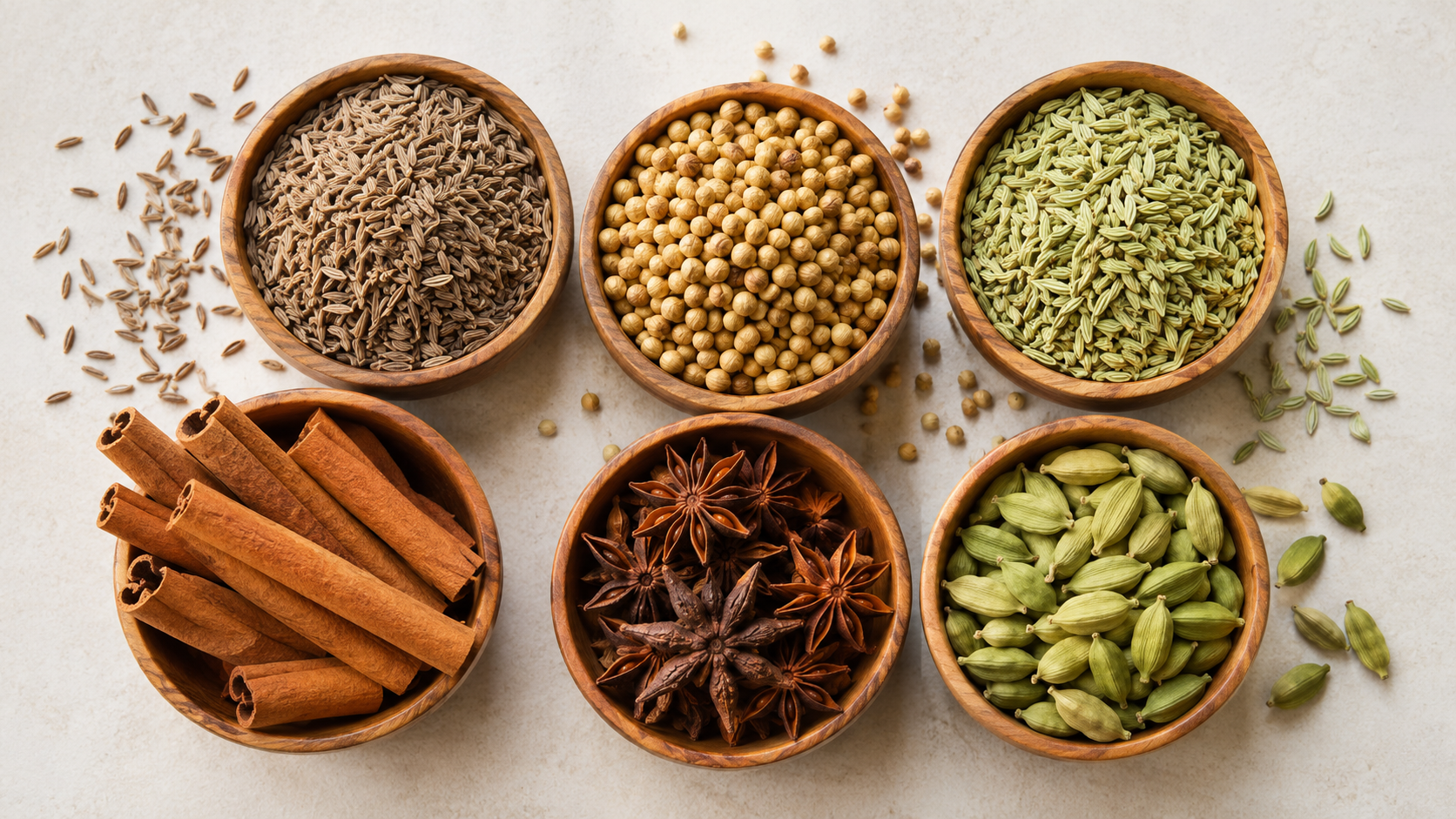
Seeds are the starting point of most Indian dishes. They are heated in oil or ghee so that their flavour spreads through the food.
Everyday Cooking Seeds
- Cumin (jeera) is earthy and warm. It is used in tadka, rice, curries and spice blends.
- Coriander (dhaniya) has a mild, citrusy taste and thickens gravies when ground.
- Fennel (saunf) is sweet and cooling. It is used in cooking, pickles and as a mouth freshener.
- Fenugreek (methi) is slightly bitter and is common in pickles, curries and dry vegetable dishes.
- Ajwain (carom seeds) is sharp and strong. It goes into parathas, snacks and fried foods.
Mustard, Dill and Other Seeds
Black mustard and yellow mustard are used for tempering, pickles and sauces. Kalonji (nigella) adds a mild onion-like taste to breads and pickles. Dill seeds (suva), caraway seeds and celery seeds are used in smaller amounts, but they matter in specific recipes and spice blends.
Aromatic Whole Spices: Small Pieces, Big Flavour
These are the spices that give biryani, pulao and garam masala their depth. They are usually sold as whole pieces, and their quality shows in the aroma.
- Cinnamon gives a warm, sweet note to curries, tea and desserts.
- Cardamom (elaichi) is fragrant and a favourite in sweets, chai and rice dishes.
- Black pepper brings heat and a sharp bite to almost every cuisine.
- Star anise adds a licorice-like sweetness to biryani and broths.
- Mace and nutmeg come from the same fruit and give a gentle, warm flavour to rich gravies and sweets.
- Bay leaves give a light, woody aroma to rice and slow-cooked dishes.
These spices are often the most valuable by weight, so size, colour and aroma matter when you buy them.
Spice Powders: Ready to Use
Powders save time and give consistent flavour. Restaurants, caterers, masala brands and packaged food makers buy them in large quantities.
| Powder | Common Use |
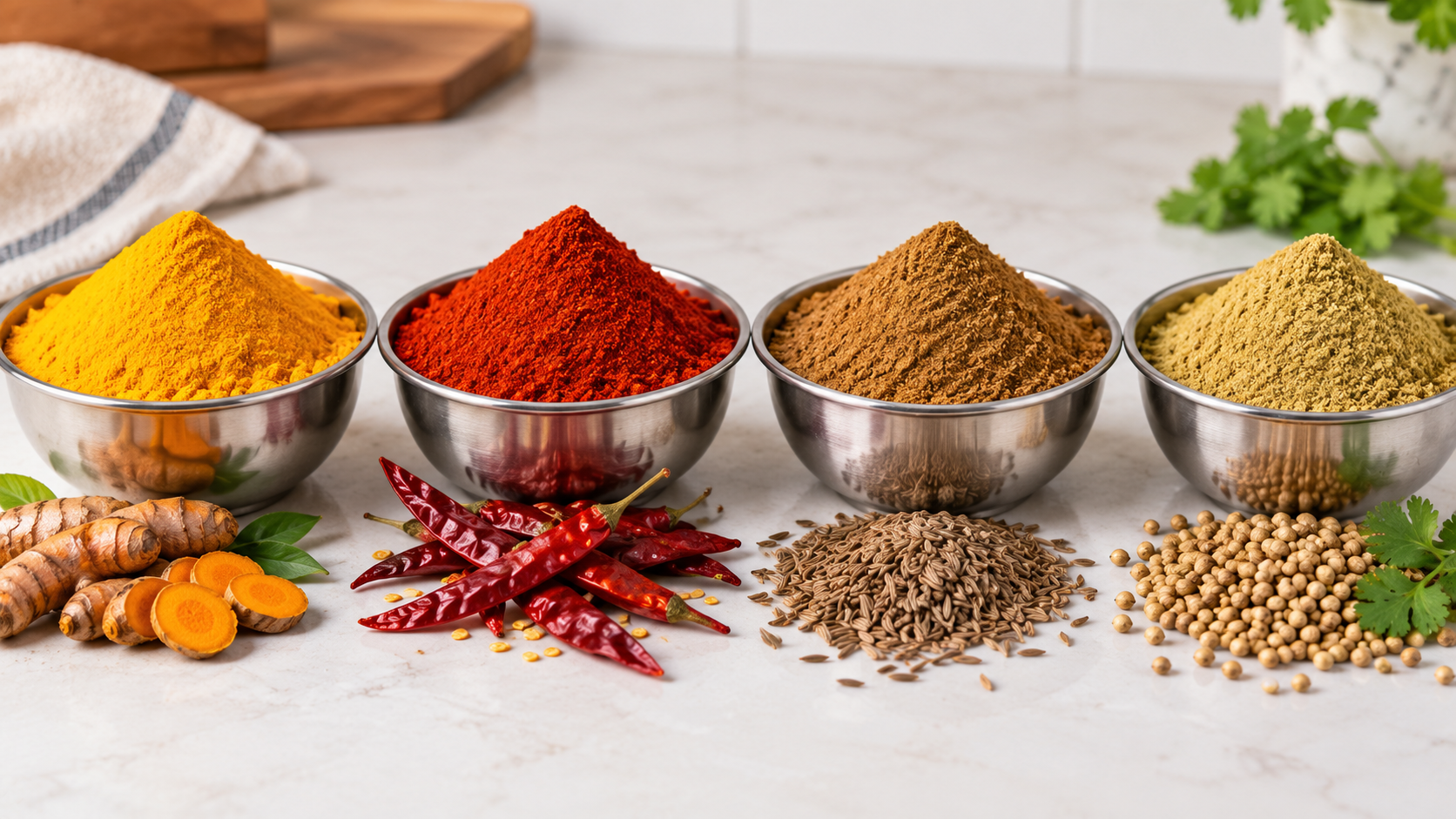
| Turmeric powder | Colour and flavour in curries, dal, rice |
| Chilli powder | Heat and colour in gravies, snacks, pickles |
| Cumin powder | Raita, chaat, dry masalas |
| Coriander powder | Base for curries and gravies |
| Dry mango powder | Sourness in chaat and curries |
| Garlic and onion powder | Seasoning for snacks, sauces and instant mixes |
| Curry powder | Ready blend for quick curries |
If you want one product that already combines two staples, look at jeera dhana powder. It is popular with buyers who make masala blends.
Dried Leaves and Herbs
Dried leaves are lighter than seeds, so the quality is judged by colour, aroma and how much stem or dust is present.
- Kasuri methi is the dried fenugreek leaf used to finish curries and parathas.
- Oregano, thyme, rosemary, parsley and sage are popular in pizza seasoning, bakery items and Western-style food.
- Tulsi, neem and moringa are used mainly in herbal teas, wellness products and traditional remedies.
Roots and Wellness Ingredients
Many spice buyers also stock ingredients that sit between cooking and wellness. Ginger and galangal are used in cooking and teas. Ashwagandha, shatavari and amla are common in herbal products. Psyllium husk, flax seeds and chia seeds are popular in health food products and breakfast mixes.
Whole Spice or Powder: Which Should You Buy?
This is one of the most common questions from new buyers. The answer depends on how you will use the spice.
| Factor | Whole Spice | Powder |
| Shelf life | Longer | Shorter |
| Flavour and aroma | Stronger and lasts longer | Fades faster once ground |
| Ease of use | Needs grinding or tempering | Ready to use |
| Adulteration risk | Easier to inspect by eye | Harder to judge by eye |
| Best for | Masala makers, tempering, retail packs | Restaurants, catering, instant mixes |
A simple rule: if you grind or blend your own masalas, buy whole spices. If you need speed and consistent colour, buy powder.
Quality Points That Apply to Every Spice
Whatever you buy, a few basics stay the same.
- Aroma: Good spices smell strong and fresh. A flat or musty smell means old or damp stock.
- Colour: The colour should be natural and even. Very bright or unnatural shades are a warning sign.
- Cleanliness: Whole spices should be free of stones, dust and stems.
- Moisture: Dry stock lasts longer and avoids mould.
- Packing: Sealed, food-grade bags protect against moisture and pests.
- Paperwork: Ask for specification sheets and lab reports where needed, and read how we handle checks on our quality page.
Buyers who want cleaner farming practices may also look at organic and IPM spices. Our blog on organic and IPM spices in modern kitchens explains why this choice is growing.
Frequently Asked Questions
What are the main types of Indian spices?
Indian spices are usually grouped into seeds, aromatic whole spices, powders, dried leaves and herbs, and roots. Each group has different uses and storage needs.
Which spices are most commonly bought in bulk?
Cumin, coriander, turmeric, chilli, fennel and black pepper are among the most reordered spices. Seeds and powders for daily cooking usually move the fastest.
What is the difference between whole spices and ground spices?
Whole spices keep their flavour longer and are easier to inspect. Ground spices are ready to use but lose aroma faster, so they need good packing and quicker use.
How do I choose a reliable spices supplier in India?
Look for a supplier who is clear about product forms, shares samples, explains packing and shelf life, and can provide lab reports or specifications when you ask. Visit their facility pages or speak to their team before placing a large order.
Can I order different spices from one supplier?
Yes. Many buyers combine seeds, powders and leaves in one order to save on freight and paperwork. Ask your supplier whether mixed orders are possible and how they are packed.
How should spices be stored?
Keep them in sealed, food-grade packing in a cool, dry place away from sunlight and strong smells. Whole spices last longer than powders.
Final Thoughts
Indian spices may look like a long, confusing list, but they follow a clear pattern. Once you know the groups, the forms and the basic quality points, choosing the right product becomes much simpler.
At Jimmy & Sons, we supply a wide range of spices, powders, herbs and seeds from Unjha, Gujarat, and you can see the full list on our products page. Working with a spices supplier in India who explains the range clearly saves you time and avoids costly mistakes. When you are ready, share your product list, quantity and packing needs through our contact us , and ask for samples to compare.