
Winter in India is closely connected with warm meals, aromatic spices, herbal beverages, and traditional comfort foods. As temperatures drop, people naturally shift toward ingredients that add warmth, flavor, and richness to their daily diet. Among the many seasonal spices used in Indian kitchens, mace spice has gained increasing popularity during colder months.
Known for its delicate aroma and slightly sweet, warm flavor, mace is commonly used in rich curries, festive dishes, herbal teas, desserts, and spice blends. Today, both households and food manufacturers are exploring the growing mace spice benefits in winter, especially in seasonal recipes and wellness-focused foods.
At Jimmy & Sons Foods LLP, premium-quality spices and herbs are supplied to domestic and global markets with a focus on freshness, purity, and export-quality standards.
What Is Mace Spice?
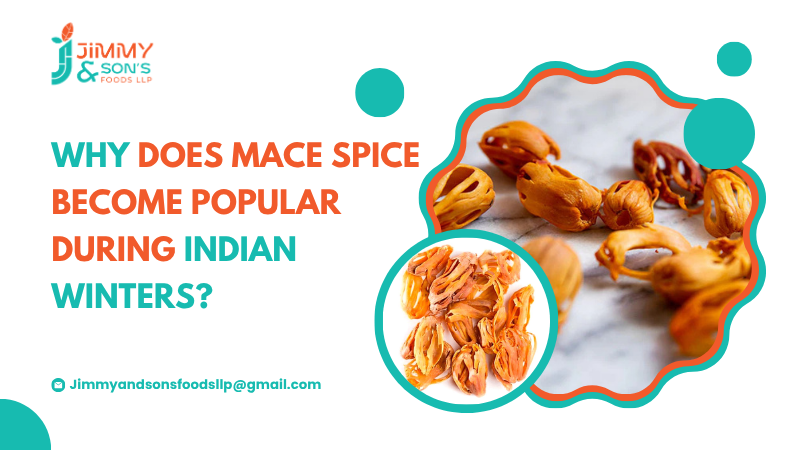
Mace is the outer covering of the nutmeg seed and is valued for its unique aroma and culinary versatility. Although mace and nutmeg come from the same fruit, mace has a lighter texture and a more refined flavor profile.
In Indian cooking, mace is often used in:
- Garam masala blends
- Mughlai dishes
- Rich gravies
- Rice preparations
- Winter desserts
- Herbal drinks
Its warming nature makes it one of the preferred warming spices for winter in Indian cuisine.
Why Mace Spice Is Preferred During Winter
Winter foods are usually richer, creamier, and heavier than meals consumed during other seasons. Mace complements these dishes perfectly by adding depth of flavor and aromatic warmth.
Key Reasons Behind the Popularity of Mace in Winter
1. Warm and Rich Aroma
Mace provides a naturally comforting aroma that suits winter recipes and festive foods.
2. Popular in Traditional Indian Cooking
Many winter recipes and spice blends include mace because of its balanced flavor.
3. Works Well in Herbal Beverages
Mace is commonly added to warm drinks and spice-infused teas during colder months.
4. Preferred in Festive and Seasonal Foods
Indian sweets, biryanis, and rich curries often use mace during celebrations and winter gatherings.
These culinary uses have increased awareness about the mace spice benefits in winter among modern consumers and food brands.
Mace Spice for Digestion During Cold Weather
Winter eating habits often include fried foods, sweets, dairy-based dishes, and heavy meals. This seasonal change is one reason why consumers search for natural kitchen ingredients that fit comfortably into digestive wellness routines.
As a result, interest in mace spice for digestion continues to grow during colder months.
How Mace Is Commonly Used in Digestive-Friendly Recipes
(1) Added to Warm Soups and Broths
Mace enhances the flavor of soups while adding warmth to winter meals.
(2) Used in Spice Blends
Traditional spice powders often combine mace with cumin, fennel, and black pepper.
(3) Included in Rice Dishes
Biryanis and pulao recipes use mace for aroma and balanced flavor.
(4) Combined With Herbal Ingredients
Many homemade seasonal beverages use mace alongside ginger and cinnamon.
Because of its warming culinary profile, mace has become one of the preferred spices during winter cooking.
Warming Spices for Winter in Indian Kitchens
Indian households have traditionally relied on aromatic spices during winter for flavor-rich meals and seasonal comfort foods. Today, many people search for the best warming spices for winter to include in their daily cooking.
Popular Winter Warming Spices
(1) Mace
Widely used in garam masala and rich gravies.
(2) Cinnamon
Commonly added to tea and desserts.
(3) Clove
Known for its strong aroma in winter recipes.
(4) Black Pepper
Used in soups and herbal drinks.
(5) Ginger
One of the most popular winter ingredients in India.
These spices are frequently included in:
- Herbal teas
- Comfort foods
- Festive dishes
- Warm beverages
- Spice-infused desserts
Among these ingredients, mace stands out because of its subtle flavor and premium culinary appeal.
Mace Tea Benefits During Winter
Herbal teas and spice-based beverages are becoming increasingly popular during Indian winters. Many consumers now prefer warm spice infusions over sugary or cold beverages, leading to rising searches related to mace tea benefits.
Why Mace Tea Is Trending
(1) Comforting Winter Beverage
Mace tea offers a warm and soothing experience during cold evenings.
(2) Aromatic and Flavorful
Its delicate aroma pairs well with other herbal ingredients.
(3) Easy to Prepare
Mace can be infused with hot water along with ginger, cinnamon, or honey.
(4) Suitable for Seasonal Wellness Routines
Many people enjoy spice-based teas during winter as part of their daily habits.
Simple Ways to Prepare Mace Tea
- Boil water with a small piece of mace
- Add ginger or cinnamon
- Simmer for a few minutes
- Serve warm after meals
The growing interest in herbal beverages has contributed significantly to the popularity of mace tea benefits during winter months.
Growing Demand for Premium Mace Spice
The demand for premium-quality spices is increasing across domestic and international markets. Food manufacturers, spice brands, restaurants, and exporters prefer spices that offer rich aroma, freshness, and consistent quality.
Industries Using Mace Spice
(1) Food Processing Industry
Used in spice blends, ready-to-cook products, and sauces.
(2) Hospitality Sector
Restaurants and hotels use mace in premium dishes.
(3) Herbal Beverage Brands
Included in tea and wellness drink blends.
(4) Export Markets
Global buyers prefer high-quality Indian spices for culinary applications.
Businesses looking for reliable sourcing solutions often prefer experienced suppliers like Premium Spices, Herbs Suppliers & Exporters in Unjha, India for consistent spice quality.
Conclusion
The popularity of mace spice during Indian winters is strongly connected to seasonal food preferences, warming culinary traditions, and the growing demand for aromatic spices. From rich curries and festive dishes to herbal beverages and spice blends, mace continues to hold an important place in winter kitchens.
The increasing awareness of mace spice benefits in winter, along with growing interest in mace spice for digestion and mace tea benefits, has made this spice more relevant than ever in both domestic and export markets.
As consumers continue searching for natural and flavorful warming spices for winter, premium-quality mace is expected to remain a preferred ingredient for food brands, restaurants, and households across India and beyond.