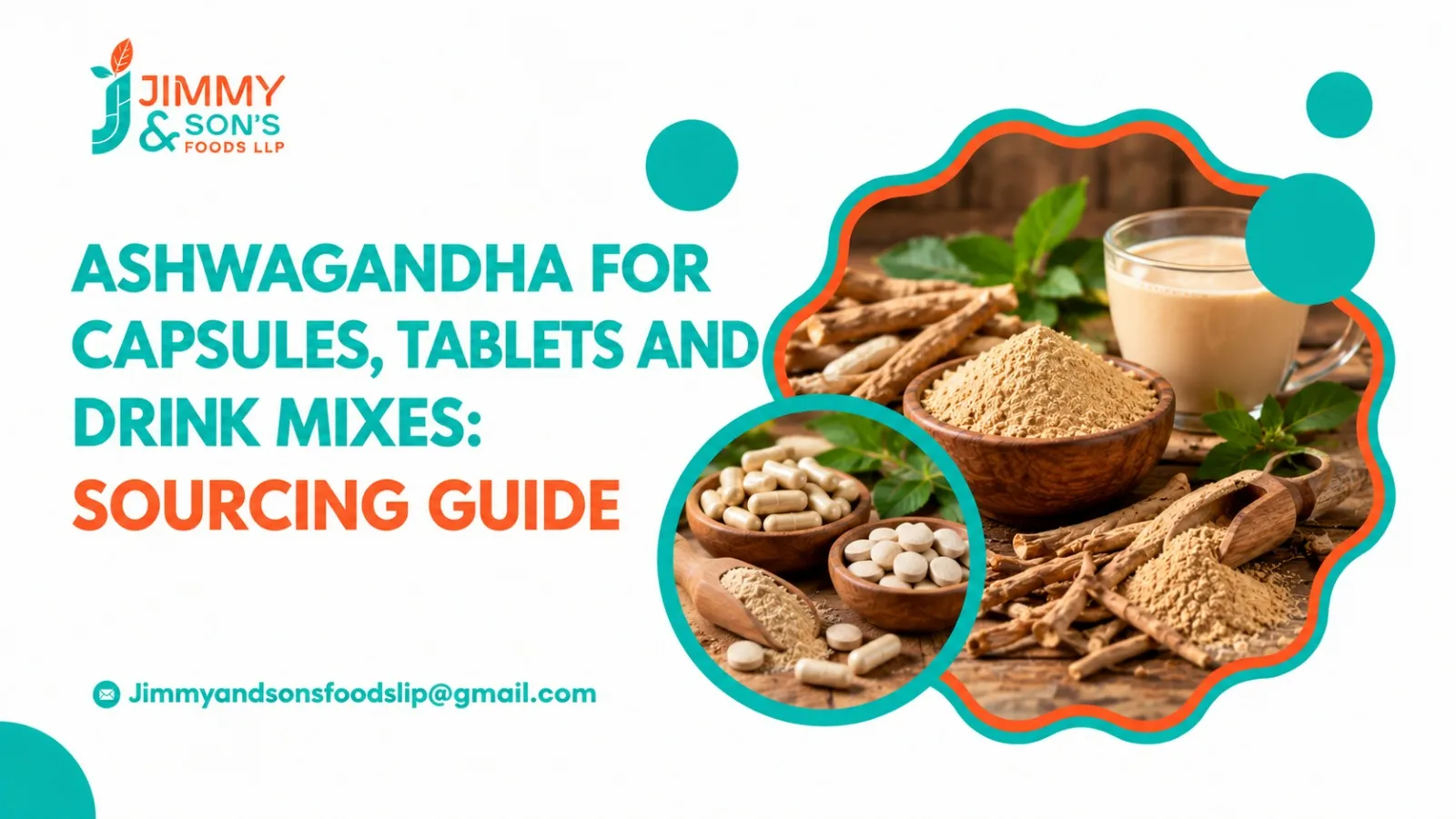
Ashwagandha looks like one ingredient, but capsule makers, a tablet manufacturer and a drink mix brand do not buy it the same way. The capsule line needs a powder that flows smoothly through the machine. The tablet line needs a powder that presses well. The drink mix brand needs a powder that blends into water without settling at the bottom.
If you are speaking with an Organic Ashwagandha Supplier for the first time, knowing what your product needs saves failed trials and wasted stock. This guide explains how to match the form, grind and quality of ashwagandha to your product.
Form and Grind for Each Product
| Product | Best Form | What Matters Most |
|---|---|---|
| Capsules | Fine, free-flowing powder | Smooth flow, low moisture, even particle size |
| Tablets | Fine powder | Good pressing, steady batches, low moisture |
| Drink mixes | Very fine powder | Easy blending, mild taste, little settling |
| Herbal tonics and decoctions | Cut root | Clean pieces, even size |
| In-house grinding | Whole or cut root | Clean, dry, mature roots |
Ashwagandha Root, Cut Root or Powder: What to Buy
Ashwagandha (Withania somnifera) is a root herb, and it is sold in three common forms.
- Whole root: The least processed form. Good if you grind in your own unit and want control over the grind.
- Cut root: Roots cut into small pieces, used for decoctions, herbal teas and further grinding.
- Powder: Ready to use for capsules, tablets, drink mixes and blends. This is what most supplement makers buy.
If your product needs speed and consistency, powder is the practical choice. If you want to check root quality yourself before grinding, start with cut root.
Ashwagandha for Capsules
Capsule filling machines need powder that moves easily and fills evenly. A powder that clumps or sticks will cause uneven capsule weights.
What capsule makers should look for:
- Low moisture: Damp powder clumps and blocks the filling machine.
- Even, fine particle size: Helps the powder flow and fill each capsule the same.
- Clean powder: No stones, root fibres or dust.
- Batch-to-batch consistency: The same colour, smell and texture in every lot.
Ask your supplier for the mesh size, such as 80 or 100 mesh, that suits your machine, and test a small batch before ordering in bulk.
Ashwagandha for Tablets
Tablets are pressed under force, so the powder must compress well and hold together without crumbling. Poor powder leads to broken or uneven tablets.
What tablet makers should look for:
- Fine, uniform powder: Presses more evenly than a coarse or mixed grind.
- Controlled moisture: Too much moisture sticks to the machine, while too little can reduce binding.
- Stable quality: Changes in grind or moisture between lots can force you to adjust your recipe each time.
- Clean taste and smell: Ashwagandha has a strong earthy smell, so fresh, clean stock matters.
Your formulation team will also add binders and other ingredients, so always run a trial with a sample before committing to a bulk order.
Ashwagandha for Drink Mixes
Drink mixes, herbal tea blends and wellness powders need ashwagandha that blends well with other ingredients.
What drink mix brands should look for:
- Very fine powder: Mixes into liquid more easily and settles less.
- Mild, clean taste: Ashwagandha has a naturally earthy, slightly bitter taste, so old or musty stock will make it worse.
- Free-flowing powder: Important for filling sachets and tubs without clumps.
- Colour consistency: Keeps your pack and your drink looking the same every time.
Many brands pair ashwagandha with other herbs to build a blend. Moringa powder and amla are common choices, and sourcing them from one supplier makes ordering simpler.
Raw Root Powder or Extract: Know the Difference
This is an important point for supplement makers. Raw ashwagandha root powder is simply dried and ground root. An extract is made by processing the root to concentrate certain compounds, and it is often sold with a fixed percentage of key compounds such as withanolides.
If your label needs a standardised extract with a stated percentage, you will need an extract, not raw powder. If you want whole-root material, such as for traditional Ayurvedic products, tonics and blends, raw root powder is the right choice. Be clear about this in your enquiry so you receive the right material.
Choosing an Organic Ashwagandha Supplier: What Supplement Makers Should Look For
For supplement and nutraceutical brands, the supplier matters as much as the product. Here is what to look for in an organic ashwagandha supplier:
- Clear form and grind: Root, cut root or powder, with the mesh size stated in writing.
- Type options: Conventional, IPM and organic ashwagandha, so you can match your product positioning. Organic needs a valid certificate if you want to make that claim.
- Test reports: Buyers commonly ask for reports on purity, moisture and safety tests.
- Traceability: The ability to trace a lot back to its source if a question comes up.
- Samples: Always test a sample on your own machine or recipe.
- Steady supply: Regular orders should arrive with the same quality each time.
Tests and documents that buyers commonly request are shown below.
| Document or Test | What It Shows |
|---|---|
| Product specification sheet | Form, grind, moisture and appearance limits |
| Lab test report | Purity and safety results for the lot |
| Organic certificate | Proof for organic claims, where applicable |
| Packing and batch details | Traceability and handling |
You can read how we handle testing on our quality page. Claims you make on your own pack must also follow the rules of the market where you sell, so check them with your regulatory advisor.
Packing and Storage
Ashwagandha powder absorbs moisture easily, so good packing and storage protect it. Common bulk packing options are shown below.
| Bag Type | Typical Pack Size |
|---|---|
| PP bags | 25 kg / 50 kg |
| Paper bags | 10 kg / 25 kg |
| Jute bags | 25 kg / 50 kg |
| Custom packing | As per buyer's requirement |
To keep stock fresh:
- Store in sealed, food-grade packing in a cool, dry place
- Keep it away from sunlight and strong-smelling products
- Reseal opened bags immediately
- Use older stock first and note the packing date
How to Run a Trial Before a Bulk Order
A small trial saves a large loss. Here is a simple way to do it:
- Share your needs first. Tell the supplier your product type, machine and the mesh size you want.
- Test a sample on your own line. Check flow, pressing or mixing, and taste.
- Record the results. Note moisture, colour and any problems.
- Repeat with a second lot. This shows whether quality stays the same from batch to batch.
- Then place a larger order. Move to bulk only after both trials pass.
Common Mistakes Buyers Make with Ashwagandha
- Confusing raw powder with extract. They are different products with different specs and prices.
- Not stating the mesh size. A powder that does not suit your machine can cause filling or pressing problems.
- Skipping a trial batch. Always test a sample before ordering in bulk.
- Ignoring moisture. Damp powder clumps, spoils faster and causes machine problems.
- Choosing on price alone. Very cheap stock may be old, poorly cleaned or inconsistent.
Frequently Asked Questions
Which form of ashwagandha is best for capsules?
A fine, free-flowing powder with low moisture works best for capsules. Ask your supplier for the right mesh size for your filling machine.
Can I use ashwagandha powder in drink mixes?
Yes. Use a very fine powder so it blends well and settles less. Its earthy taste is natural, so many brands pair it with flavours or other herbs.
What is the difference between ashwagandha powder and extract?
Powder is dried, ground root. Extract is a concentrated form, often standardized to a set percentage of active compounds. Choose based on what your label and formulation require.
What should I check before choosing an organic ashwagandha supplier?
Check the form, grind or mesh size, moisture, test reports, packing and traceability. If you need an organic claim, ask for a valid organic certificate and a sample.
Is organic ashwagandha necessary for supplements?
Not always. Organic is useful when your brand makes an organic claim. IPM or conventional ashwagandha can also suit products that do not need that claim.
How should ashwagandha powder be stored?
Keep it in sealed, food-grade packing in a cool, dry place away from sunlight and strong odours. Reseal opened bags right away.
Final Thoughts
The best ashwagandha for your product is the one that fits your machine and your recipe. Capsule and tablet makers need fine, dry, consistent powder. Drink mix brands need a very fine powder that blends well and tastes clean. Knowing this before you place an order helps you avoid costly trial failures.
At Jimmy & Sons, we supply conventional, IPM and organic ashwagandha in root, cut root and powder forms from Unjha, Gujarat, packed for supplement makers, Ayurvedic companies and wellness brands. A good organic ashwagandha supplier will help you match the form and spec to your product before you commit to volume. Send us your product type, quantity and packing needs through our contact page, and ask for a sample to test on your own line.