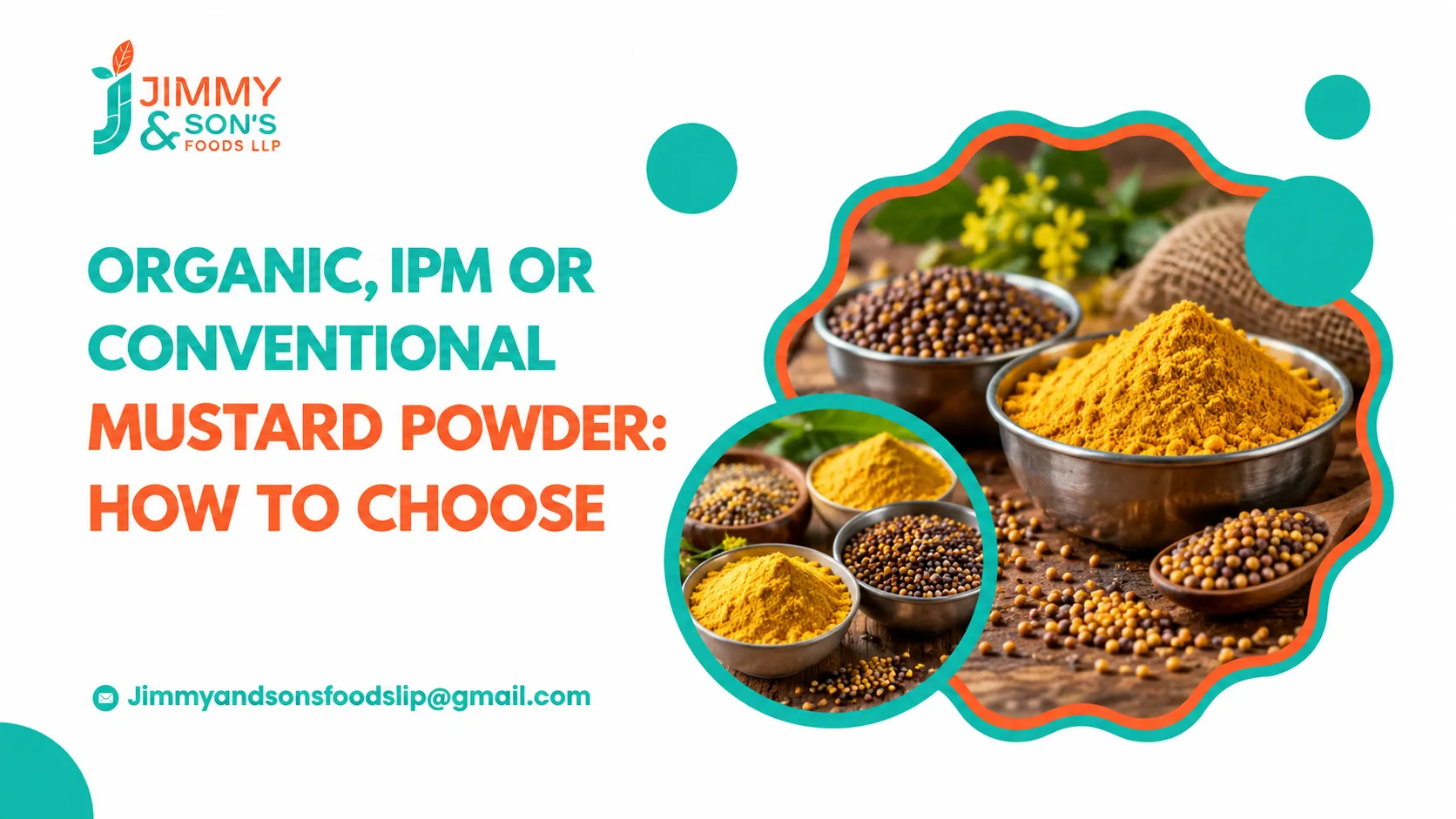
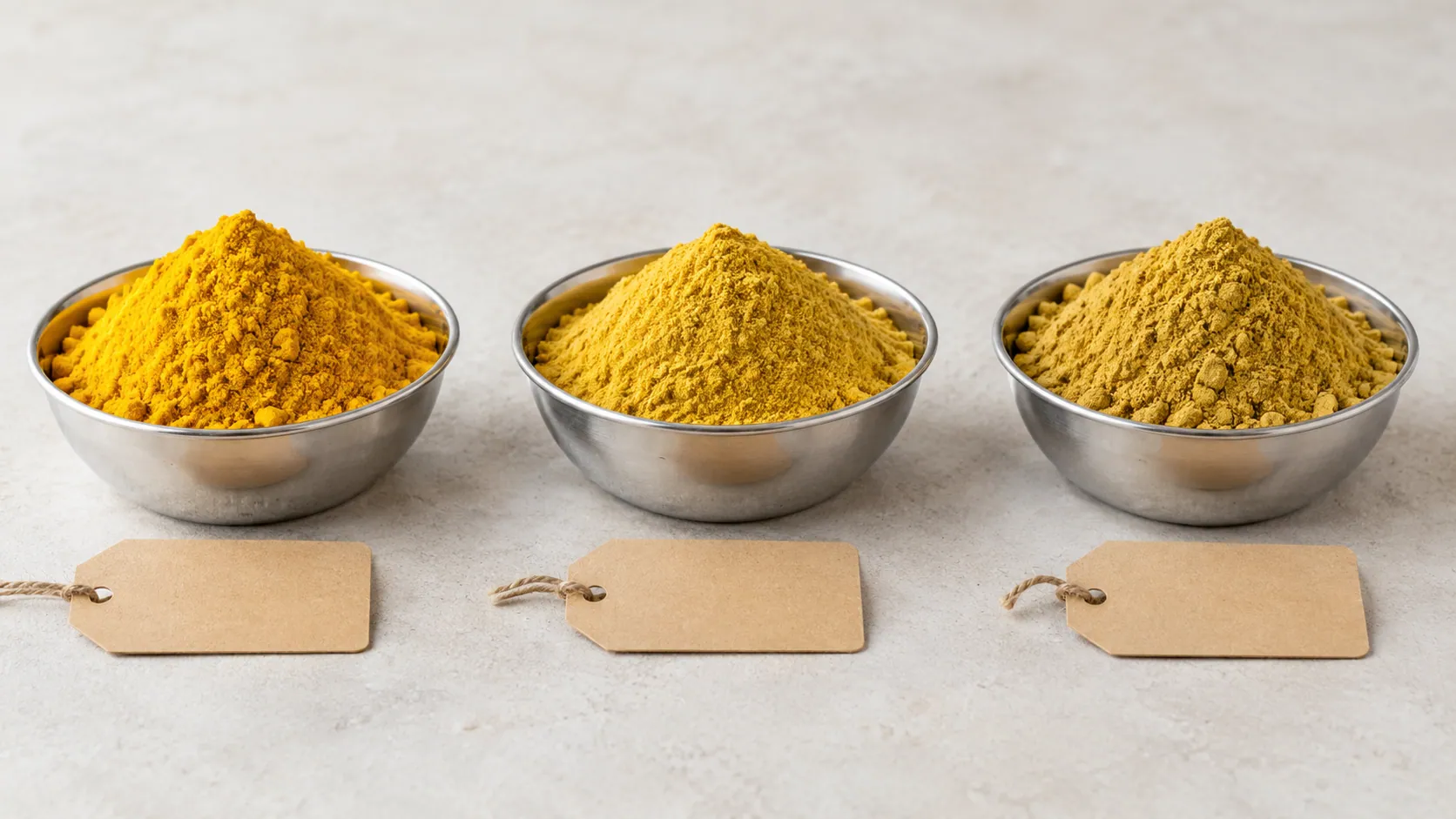
Open three bags of mustard powder side by side, and you may not see any difference. The colour is similar, the smell is sharp and the texture is fine. But one bag may be organic, one IPM and one conventional, and that choice affects your price, your paperwork and the customers you can sell to.
If you are speaking to Mustard Powder Suppliers for the first time, this is one of the first questions you will face. This guide explains all three types in simple words, so you can pick the one that fits your product and your budget.
Which Type Suits Which Buyer?
Here is a short summary before we go into detail.
| Type | Best For | Main Reason to Choose It |
| Conventional | Large-volume food units, price-sensitive buyers | Lowest cost and wide availability |
| IPM | Brands that want responsible sourcing without the organic price | A middle path between cost and farming practice |
| Organic | Clean-label products, premium brands, organic retail | Certified farming with proof for your own buyers |
If you only need a rough rule: choose conventional for cost, organic when your own customers ask for certified products, and IPM when you want a better farming story at a fair price.
What Is Conventional Mustard Powder?
Conventional mustard powder is made from mustard seeds grown with standard farming methods. Farmers may use chemical fertilisers and pesticides, within the legal limits for food crops.
It is the most common type in the market. Most sauce makers, pickle units and seasoning companies in India use it every day because it is easy to find and the price is steady.
Where it works well:
- High-volume sauce and condiment production
- Pickle masalas and spice blends sold at regular prices
- Industrial food units where cost per kg matters most
What to keep in mind:
- It does not carry any organic or IPM claim, so you cannot use those words on your pack.
- Quality still depends on the seed, grinding and cleaning, so it should not be treated as a lower-quality product.
What Is IPM Mustard Powder?
IPM stands for Integrated Pest Management. It is a way of farming where the farmer watches the crop closely, uses natural pest control first, and applies chemicals only when really needed. The aim is to reduce pesticide use, not to remove it fully.
IPM is not the same as organic. An IPM crop can still use some inputs that an organic farm cannot. That is why IPM mustard powder usually costs less than organic.
Where it works well:
- Brands that want to show responsible sourcing
- Buyers moving slowly from conventional to organic
- Export buyers who ask for reduced pesticide use
You can read more about why this approach is growing in our blog on organic and IPM spices in modern kitchens.
What Is Organic Mustard Powder?
Organic mustard powder comes from mustard grown under organic farming rules. This means no synthetic pesticides or chemical fertilisers, and the farm and the product must be certified by an approved body. In India, organic production is generally certified under the National Programme for Organic Production (NPOP), and export buyers may ask for other standards too.
The key word is certified. A bag that only says “natural” or “chemical free” is not organic. Real organic stock comes with a certificate and records that link the product back to the farm.
Where it works well:
- Clean-label sauces, dressings and seasonings
- Premium and gourmet brands
- Organic retail packs and private label lines
- Export orders that need organic proof
What to keep in mind:
- It costs more because certified farming yields less and needs more records.
- Supply can be tighter, so plan orders early.
Side-by-Side Comparison
| Point | Conventional | IPM | Organic |
| Farming approach | Standard methods | Pest control with minimal chemical use | Certified organic methods |
| Synthetic pesticides | Allowed within legal limits | Reduced, used only when needed | Not allowed |
| Typical price | Lowest | Middle | Highest |
| Proof needed | Standard quality documents | Supplier’s IPM records | Organic certificate and traceability |
| Pack claim allowed | None | Depends on supplier proof | “Organic” with valid certification |
| Best for | Cost-led production | Balanced sourcing | Premium and clean-label |
What Stays the Same in All Three Types?
This is where many buyers get confused. The farming method does not change the basic nature of the product. Mustard powder gets its sharp, pungent taste from the mustard seed and how it is ground, not from the label. So a well-made conventional powder can be sharper than a poorly handled organic one.
For every type, check these basics:
- Pungency and aroma: The smell should be strong and clean, not flat or musty.
- Colour: Even and natural for the seed type, such as black or yellow mustard.
- Fineness: The grind should be uniform, so it mixes well in sauces and masalas.
- Moisture: Dry powder resists lumps and mould.
- Cleanliness: No husk, stones or dust.
- Packing: Sealed, food-grade bags that protect against damp.
The seed also matters. Some buyers prefer powder made from black mustard for a stronger bite. You can read how we handle testing on our quality page.
How to Choose by Business Type?
Sauce and Condiment Makers
Your priorities are steady flavour and steady price. Conventional works for most mass-market products. If your brand sells a “clean label” or “organic” range, choose certified organic for that range only.
Pickle and Masala Units
Pickle masalas use mustard powder in good quantity, so cost adds up fast. Conventional or IPM usually makes sense here. Go organic only if your pickle brand is positioned as premium or organic.
Retail and Private Label Brands
Your customer reads the label. If you want to print “organic” on the pack, you need certified stock and the paperwork to prove it. IPM is a good choice if you want a responsible sourcing message without the full organic price.
Export-Focused Buyers
Importers often ask for specific proof of farming method and testing. Decide your target market first, then choose the type. It is easier to start with the right grade than to switch mid-order.
Proof to Expect for Each Type
| Type | Documents That Usually Help |
| Conventional | Product specification, lab report, packing details |
| IPM | Specification, lab report, supplier’s IPM practice records |
| Organic | Valid organic certificate, traceability records, lab report |
If a supplier says a product is organic but cannot show a certificate, treat it as conventional until proven otherwise.
Packing and Supply Planning
Whichever type you pick, plan packing and stock early. Bulk mustard powder is usually packed in 25 kg or 50 kg bags, and smaller packs are possible for repacking. Mustard powder is sensitive to damp and heat, so store bags in a cool, dry place and keep organic stock separate from other types to avoid mix-ups. Organic and IPM supply can be tighter than conventional, so share your yearly need with your supplier instead of ordering at the last minute.
Common Mistakes Buyers Make
- Paying for organic when it is not needed. If your product does not use organic claims, the extra cost may not give you anything back.
- Assuming IPM means organic. It does not, and it should not be sold as organic.
- Judging by price alone. A very low price can mean old stock or poor cleaning, whatever the type.
- Ignoring the seed. Black and yellow mustard behave differently in a recipe.
- Skipping samples. Always test a sample in your own recipe before placing a bulk order.
Frequently Asked Questions
What is the difference between organic and IPM mustard powder?
Organic mustard powder is grown without synthetic pesticides and chemical fertilisers under certified rules. IPM mustard powder is grown with reduced pesticide use and close crop monitoring, but it is not fully organic.
Is organic mustard powder more pungent than conventional?
Not by default. Pungency depends on the seed, its freshness and how it is ground and stored. Organic does not automatically mean stronger flavour.
Is IPM mustard powder safe to use?
Yes, when it meets food safety standards and testing limits. IPM aims to lower pesticide use, and a good supplier will share test reports on request.
Can I label my product organic if I use IPM mustard powder?
No. You can only use the organic claim when your ingredients and process are certified organic.
Which type of mustard powder is best for pickles?
Conventional or IPM works well for most pickle masalas because of cost. Choose organic if your pickle brand is sold as organic or premium.
How do I choose among Mustard Powder Suppliers?
Look for a supplier who is clear about each type, shares samples and test reports, explains packing options and can show certificates for organic stock. Compare these points rather than only comparing price.
Final Thoughts
Choosing between organic, IPM and conventional mustard powder is mostly a business decision. Conventional keeps costs low, IPM gives a balanced option, and organic gives you proof for premium and clean-label products. The flavour comes from good seed and good processing in all three.
At Jimmy & Sons, we supply conventional, IPM and certified organic mustard powder from Unjha, Gujarat, so buyers can compare all three from one source. Working with Mustard Powder Suppliers who explain these differences clearly helps you avoid paying for claims you do not need. Share your quantity, type and packing needs through our contact page, and ask for samples before you place a larger order.