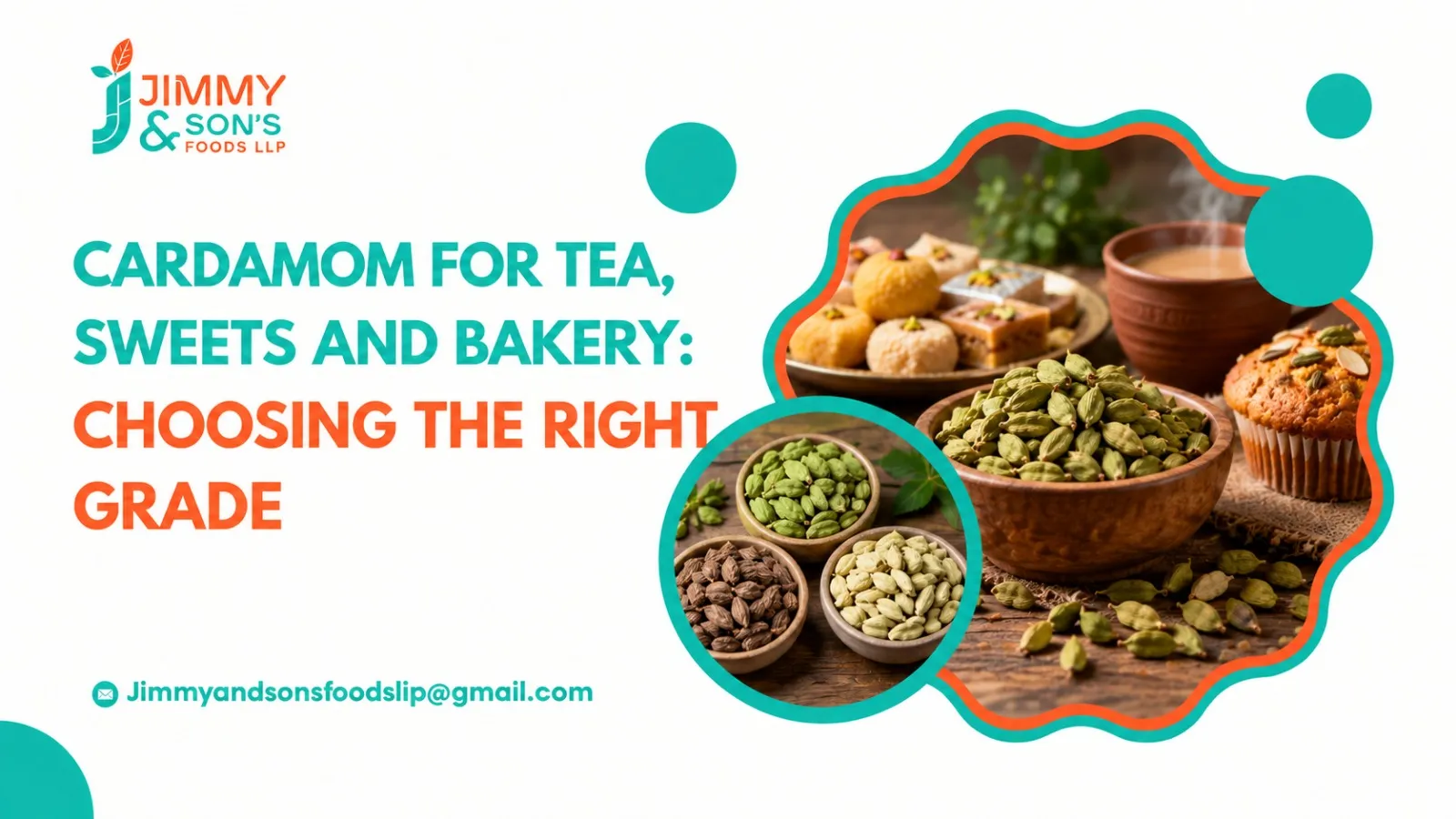
A chai maker, a mithai shop and a bakery may all ask for "good elaichi", but they do not need the same cardamom. The chai maker wants a strong aroma that survives boiling. The mithai shop wants a clean green colour in the seeds. The bakery wants a fine powder that mixes evenly into dough.
If you buy from an organic cardamom exporter or any bulk supplier, knowing the grade and form for your use saves money and avoids complaints later. This guide explains it in simple words.
Which Cardamom for Which Use?
| Use | Best Form | What Matters Most |
|---|---|---|
| Masala chai and tea blends | Crushed pods or seeds | Strong aroma, steady flavour |
| Sweets and mithai (kheer, halwa, laddu) | Seeds or fine powder | Clean colour, sweet aroma |
| Cakes, cookies and bread | Fine seed powder | Uniform grind, no husk |
| Biryani, pulao and rice dishes | Whole pods | Full, plump pods |
| Gift packs and retail | Bold whole pods | Size, colour, appearance |
Understanding Cardamom Size Grades
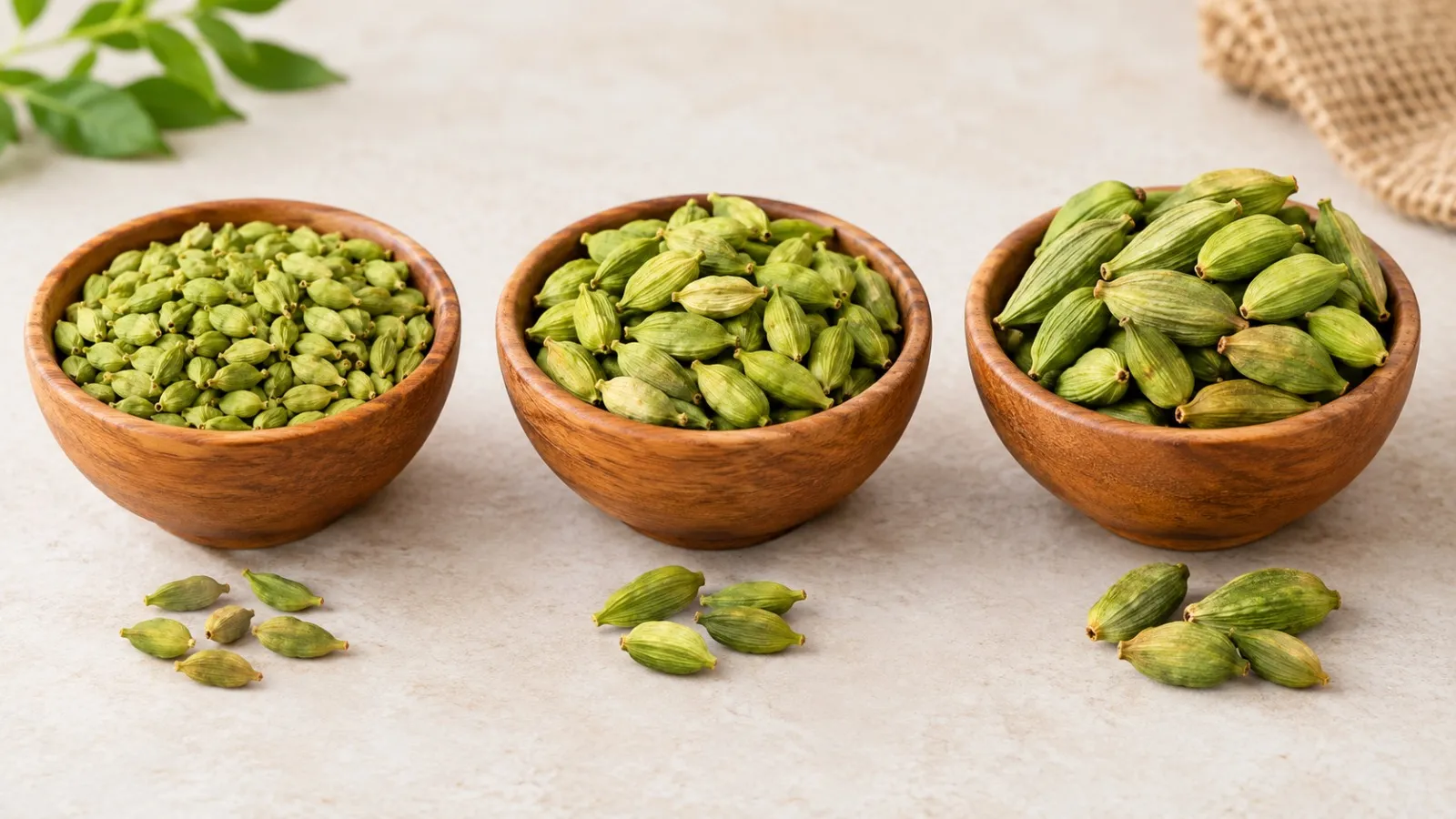
Green cardamom is usually sorted by pod size. You will often hear sizes such as 6mm+, 7mm+ and bold. A larger number means bigger pods.
- 6mm+: Smaller to medium pods. Good for blends, grinding and everyday use.
- 7mm+: Medium to large pods with a fuller look. Popular for general trade and retail.
- Bold: The largest, plumpest pods. Chosen for premium packs and whole-pod use.
Here is the key point many buyers miss: size shows how the pod looks, not always how strong it smells. A bold pod looks better in a gift pack, but if you are grinding the cardamom for chai or a bakery mix, a smaller grade with good aroma can work just as well and cost less. Size grade names can differ between traders, so always ask for a sample and compare it with your own requirement.
Pods, Seeds or Powder: Form Matters as Much as Grade
Before choosing a size, decide which form you need.
- Whole pods keep their aroma longest because the husk protects the seeds. Best for rice dishes, retail packs and premium products.
- Seeds are the small black seeds taken out of the pod. They give strong flavour in sweets, tea and drinks.
- Powder is ready to use and blends easily, but it loses aroma faster once ground.
A simple rule: the more the cardamom is processed, the shorter its shelf life. If you can grind fresh in your own unit, buy whole pods or seeds. If you need speed and consistency, buy powder in smaller lots.
Choosing Cardamom for Tea
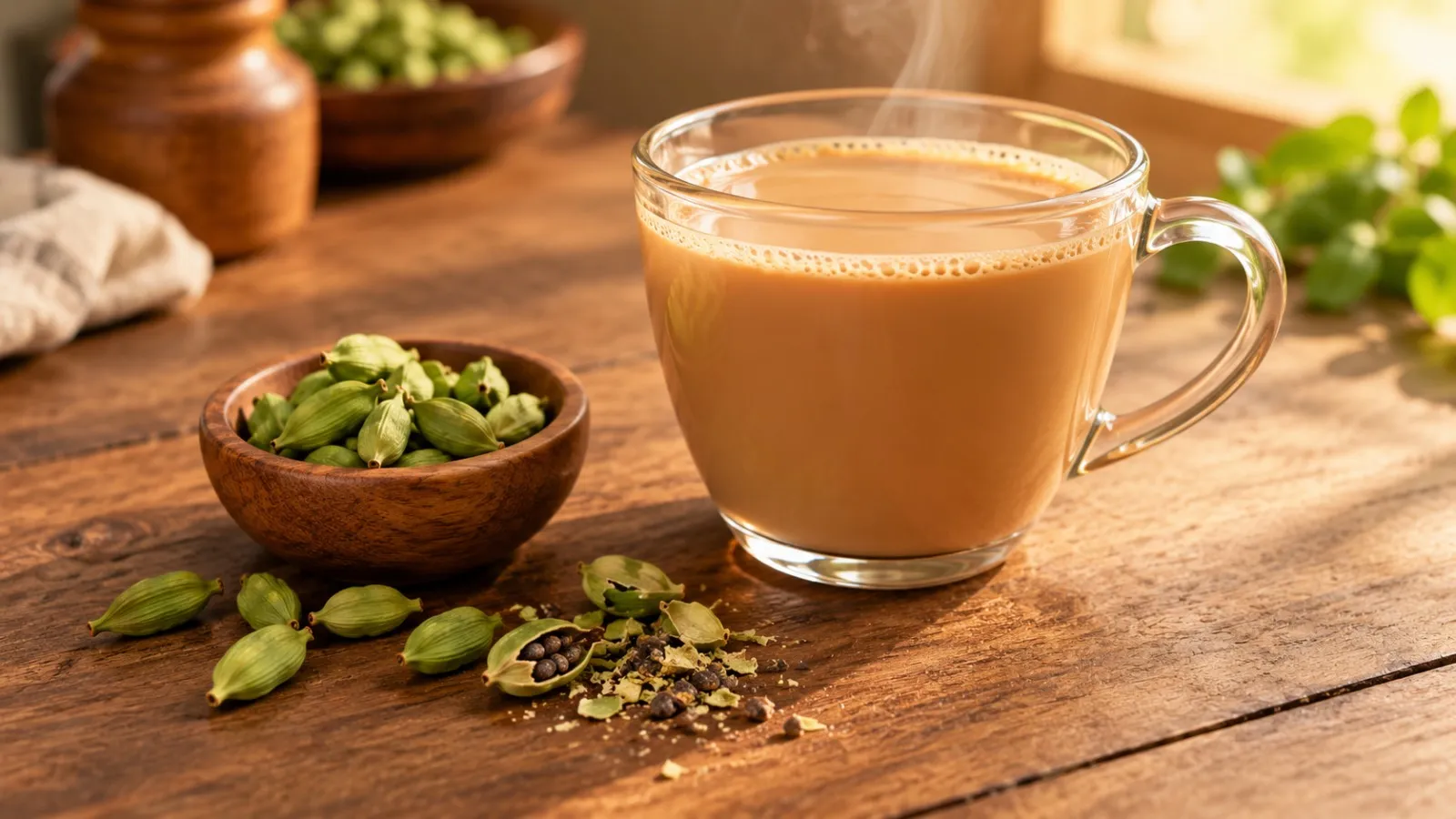
Tea is one of the biggest uses of cardamom in India. In masala chai, cardamom is boiled with milk, water, tea leaves and other spices, so the aroma must be strong enough to stay after heating.
What tea makers should look for:
- Crushed pods or seeds that release flavour quickly
- A strong, fresh smell when you rub a few pods in your hand
- Steady quality across every lot, so your blend tastes the same each time
- Low husk and dust, which can make tea bitter or cloudy
Tea brands that blend cardamom into ready mixes often prefer seeds or coarse powder because they mix evenly. Size is less important here, so a smaller grade with good aroma is usually enough. Many masala chai blends also use cinnamon, so it helps to source both from one place. You can see our cinnamon range for that.
Choosing Cardamom for Sweets
Cardamom is part of almost every Indian sweet, from kheer and halwa to laddu, peda and shrikhand. The flavour should be sweet and perfumed, not sharp or musty.
What sweet makers should look for:
- Clean seeds: Dark, even seeds with no broken husk or dust
- Fresh aroma: Old stock smells flat and can leave a dull taste
- Fine grind for powder: A smooth powder blends into milk and syrup without lumps
- Natural colour: Dull or very pale powder can mean old stock or poor handling
Because sweets use cardamom in small amounts but depend on it for flavour, it is worth paying for good aroma instead of the cheapest option.
Choosing Cardamom for Bakery
Bakeries use cardamom in cakes, cookies, buns, bread and pastries. Oven heat can reduce aroma, so the powder should start strong.
What bakeries should look for:
- Fine, uniform seed powder that mixes evenly
- No husk pieces, which can leave specks in the dough
- A strong smell even before baking
- Consistent colour and fineness from lot to lot
For bakery use, ask for powder made from seeds rather than whole pods with husk, as husk adds bitterness and a rough texture. Buy smaller quantities more often, since ground cardamom fades faster.
Does Organic or IPM Matter for These Uses?
All three types of cardamom, conventional, IPM and organic, can give good flavour. The choice depends on your brand and your customer, not on taste alone.
- Conventional suits cost-led production.
- IPM suits brands that want a more responsible sourcing story with reduced pesticide use.
- Organic suits premium tea, sweets and bakery products that carry an organic claim. You need a valid certificate to make that claim.
Our blog on organic and IPM spices in modern kitchens explains why more food brands are making this choice.
Quality Checks Before You Accept a Lot
Whatever the use, check these points when a sample or shipment arrives.
| Check | What to Look For | Why It Matters |
|---|---|---|
| Aroma | Strong, fresh and sweet | Weak or musty smell means old or damp stock |
| Colour | Even green pods, clean dark seeds | Mixed or faded colour suggests mixed lots |
| Size | Uniform within the grade | Mixed sizes look untidy and grind unevenly |
| Moisture | Dry pods that feel firm | Damp pods can grow mould |
| Foreign matter | Few stems, husk pieces or dust | Affects food safety and appearance |
| Powder fineness | Smooth and even | Affects mixing and mouthfeel |
If you need test reports or specification sheets, ask for them in writing. You can read how we handle testing and quality on our quality page.
How to Store Cardamom So It Keeps Its Aroma
Cardamom is valued for its natural oils, and those oils fade with heat, air and light. A few simple habits help.
- Keep it in sealed, food-grade packing
- Store in a cool, dry and shaded place
- Keep it away from strong-smelling products
- Reseal opened bags right after use
- Use older stock first and note the packing date
Powder needs the most care. If you do not use it fast, keep it in smaller airtight packs.
Common Mistakes Buyers Make with Cardamom
- Paying for bold size when it is not needed. If you grind or crush the pods, a smaller grade with good aroma gives the same flavour at a lower price.
- Buying powder in large lots. Ground cardamom fades fast, so a big stock can lose its aroma before you finish it.
- Choosing by colour alone. A bright green pod looks good, but only the smell and freshness tell you if the flavour is strong.
- Skipping a trial. Test a sample in your own chai, sweet or dough before you place a bulk order.
- Mixing old and new stock. This lowers the aroma of the whole lot, so keep batches separate.
Frequently Asked Questions
Which cardamom grade is best for chai?
A smaller or medium grade with strong aroma is usually enough for chai. Because the pods are crushed or boiled, bold size does not add much value.
Is cardamom powder better than whole pods for bakery?
For bakeries, fine seed powder is usually easier to use because it mixes evenly. Whole pods are better for rice dishes and retail packs.
What does 6mm+ or 7mm+ cardamom mean?
It refers to the pod size. A higher number means a larger pod. Size shows appearance, and does not always tell you how strong the aroma is.
Does organic cardamom taste better?
Not automatically. Taste depends on freshness, handling and storage. Organic mainly matters if you need a certified organic product for your own customers.
How long does cardamom stay fresh?
Whole pods keep their aroma longer than seeds, and seeds longer than powder. Sealed packing in a cool, dry place helps all forms last longer.
What should I check before buying from an organic cardamom exporter?
Check the form, size grade, aroma, moisture and foreign matter. If you need an organic claim, ask for a valid organic certificate and a test report along with the sample.
Final Thoughts
The right cardamom is not always the biggest or the most expensive. For tea, you need an aroma that lasts through boiling. For sweets, you need clean seeds and a fresh, sweet smell. For bakery, you need a fine, even powder. When you match the grade and form to your use, you get better results and spend less.
At Jimmy & Sons, we supply conventional, IPM and organic cardamom from Unjha, Gujarat, in different sizes and forms for tea brands, sweet makers and bakeries. Working with an organic cardamom exporter who explains grades honestly helps you buy what you need, not what looks best on paper. Send us your use, quantity and packing needs through our contact page, and ask for samples to test in your own recipe.