
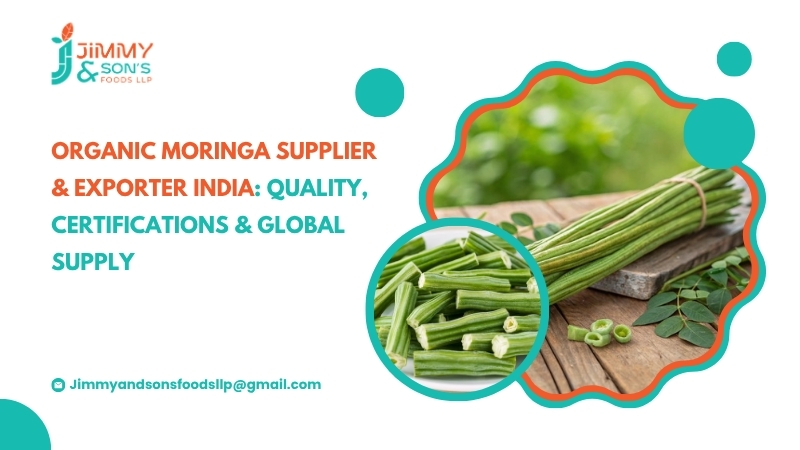
Organic Moringa has become one of the most sought-after plant-based ingredients across the global health and wellness market.Food manufacturers, nutraceutical companies, herbal brands and cosmetic producers increasingly prefer organically cultivated Moringa because of its purity, nutritional value and sustainable production methods.India has emerged as a dependable source of premium Organic Moringa thanks to its favourable climate, experienced farmers and well-established agricultural practices. From carefully managed farms to export-ready packaging, Indian suppliers focus on maintaining consistent quality while meeting international food safety and organic certification requirements.
However, not every exporter follows the same production standards. Buyers should evaluate farming methods, certifications, processing techniques, laboratory testing and supply capabilities before selecting a long-term supplier.This article explains what makes India a preferred destination for Organic Moringa exports, the quality standards followed by reputable suppliers, the different products available and the factors that help businesses source Organic Moringa with confidence.
Whether you are importing for food production, dietary supplements, herbal formulations or personal care products, understanding these essentials will help you make informed sourcing decisions while building a reliable supply chain.
Why Organic Moringa from India Is Trusted Worldwide
India has long been recognised for cultivating Moringa in regions with warm temperatures, fertile soil and favourable rainfall. These natural conditions support healthy plant growth without relying heavily on synthetic agricultural inputs. When combined with certified organic farming methods, the result is Moringa that meets the expectations of buyers looking for clean-label, plant-based ingredients.
Organic cultivation also promotes healthier soil, better biodiversity and sustainable farming practices. Farmers use natural compost, biological pest management and crop rotation to maintain soil fertility while protecting the surrounding ecosystem. These methods help preserve the nutritional quality of the leaves throughout the growing cycle.
International buyers also appreciate India’s well-developed agricultural supply chain. From harvesting and drying to processing and packaging, experienced suppliers follow systematic quality controls that reduce contamination risks and maintain product consistency. This level of organisation makes India a dependable sourcing destination for businesses requiring long-term supply.As global demand for organic foods and herbal ingredients continues to increase, Indian Organic Moringa remains a preferred option for manufacturers looking for reliable quality and competitive pricing.
Natural Growing Conditions That Support Premium Quality
Moringa grows best in tropical and subtropical climates where sunlight is abundant throughout the year. Several farming regions in India naturally provide these conditions, allowing farmers to cultivate healthy crops while reducing dependence on artificial growth methods.Healthy soil plays an equally important role. Organic farms improve soil structure through composting and natural nutrient management, creating an environment where Moringa develops strong leaves rich in naturally occurring vitamins, minerals and antioxidants.
Harvest timing also influences quality. Experienced growers collect mature leaves at the correct stage before carefully drying them under controlled conditions. Proper drying helps retain colour, aroma and nutritional value while reducing moisture that could affect shelf life.The combination of climate, sustainable farming and careful post-harvest handling contributes to the premium quality expected by international buyers.
India’s Position in the Global Organic Moringa Market
India is among the world’s largest producers of Moringa and supplies a significant share of global demand. Growing awareness of plant-based nutrition has expanded export opportunities across food, nutraceutical and personal care industries.Indian exporters offer flexible production capacity, competitive pricing and customised packaging for businesses of different sizes. Many suppliers also understand country-specific import regulations, making international trade smoother.
With continued investment in organic agriculture and quality assurance, India’s reputation as a dependable Organic Moringa supplier continues to strengthen across established and emerging global markets.
What Makes a Reliable Organic Moringa Supplier?
Selecting an Organic Moringa supplier involves more than comparing prices. Consistent quality, transparent farming practices and compliance with international standards have a direct impact on product performance and customer satisfaction.Reliable suppliers typically maintain close relationships with certified organic farms, ensuring complete traceability from cultivation to export. They implement documented quality control procedures throughout harvesting, drying, grinding and packaging to minimise contamination risks.A dependable exporter also provides clear product specifications, laboratory test reports and certification documents whenever required. This level of transparency helps buyers verify product authenticity before placing bulk orders.
Production capacity is another important consideration. Businesses with growing demand require suppliers capable of maintaining consistent inventory while meeting agreed delivery schedules.Communication also matters. Professional exporters respond quickly, provide accurate documentation and offer technical support regarding packaging, storage and shipment requirements.Choosing an experienced supplier reduces sourcing risks and helps businesses build stable long-term partnerships.
Important Organic Certifications
Organic certification confirms that Moringa has been cultivated and processed according to recognised organic farming standards.
Depending on the destination market, buyers may request certifications such as:
- NPOP (India Organic)
- USDA Organic
- EU Organic
These certifications generally cover farming practices, processing methods, record keeping and traceability. Regular inspections help ensure compliance throughout production.Suppliers holding recognised certifications often inspire greater confidence among international importers because certification demonstrates a structured commitment to quality and sustainable agriculture.
Quality Testing and Traceability
Laboratory testing verifies that exported Organic Moringa meets defined quality and safety requirements.
Common evaluations include:
- Moisture content
- Microbiological testing
- Heavy metal analysis
Reliable traceability systems record every production stage, from farm location to final shipment. This documentation supports food safety requirements and enables quick verification whenever needed.Strong quality assurance systems help buyers maintain consistent manufacturing standards while reducing supply chain risks.
Organic Moringa Products Available for Export
Organic Moringa is processed into several forms to meet the needs of different industries. Product selection depends on manufacturing requirements, formulation preferences and end-user applications.Organic Moringa Powder remains the most widely traded format because it is easy to incorporate into supplements, beverages and functional foods. Whole dried leaves are also popular among tea manufacturers and herbal product companies.Some exporters further process Organic Moringa into tea blends, capsules and customised ingredient solutions for private-label businesses.
Reputable suppliers focus on maintaining uniform particle size, controlled moisture levels and hygienic packaging across all product categories. This consistency improves manufacturing efficiency while supporting longer shelf life during international transportation.Offering multiple product options allows suppliers to serve a wider range of industries while meeting changing consumer preferences for natural and organic ingredients.
Organic Moringa Powder
Organic Moringa Powder is produced by cleaning, drying and finely grinding carefully selected leaves under hygienic conditions.
It is commonly used in:
- Nutritional supplements
- Functional beverages
- Smoothie mixes
- Health foods
- Plant-based formulations
Uniform grinding and proper moisture control help preserve quality during storage and transport.
Organic Moringa Leaves
Whole Organic Moringa Leaves are preferred by herbal tea manufacturers and companies producing minimally processed botanical ingredients.Careful drying preserves their natural appearance while maintaining aroma and quality. Proper packaging also protects the leaves from excess moisture during export.
These products are suitable for businesses seeking premium whole-leaf ingredients for food and herbal applications.
Quality Standards Followed by Exporters
Maintaining quality is essential when supplying Organic Moringa to international markets. Buyers expect products that meet food safety requirements, retain their natural characteristics and arrive in excellent condition. Reputable exporters achieve this by following controlled production methods from harvesting through shipment.
Fresh Moringa leaves are harvested at the appropriate maturity stage and handled carefully to minimise damage. They are then cleaned and dried under controlled conditions to preserve their natural colour, aroma and nutritional profile. Throughout processing, hygiene practices help reduce contamination and maintain product consistency.
Modern processing facilities often use dedicated equipment and regular quality inspections to ensure each batch meets predefined specifications. Laboratory testing verifies important parameters before packaging, allowing exporters to provide reliable products that comply with customer requirements.Proper documentation, traceability and quality assurance systems also help businesses meet import regulations across different countries. These measures strengthen confidence among international buyers looking for dependable long-term supply partners.
Harvesting and Processing
The quality of Organic Moringa begins with careful harvesting. Mature leaves are collected at the right time to maintain their natural nutritional value. Gentle handling helps prevent unnecessary damage before processing.
After harvesting, the leaves are cleaned to remove dust and other natural impurities. Controlled drying is then used to reduce moisture while preserving colour and aroma. Once dried, the material may be processed into powder or packed as whole leaves, depending on customer requirements.Maintaining clean processing conditions throughout every stage helps deliver consistent export-quality products.
Packaging and Storage
Packaging plays an important role in protecting Organic Moringa during storage and international transportation.Reliable exporters use food-grade packaging materials designed to minimise exposure to moisture, light and air. Depending on buyer requirements, products may be supplied in bulk bags, cartons or customised private-label packaging.
Finished products are stored in clean, dry warehouses under controlled conditions until shipment. Proper storage supports product stability and helps maintain quality throughout the export process.
Industries That Use Organic Moringa
Organic Moringa is valued across multiple industries because of its versatility and natural origin. As consumer interest in clean-label ingredients continues to grow, businesses increasingly include Organic Moringa in a wide range of products.
Food manufacturers use it to develop health-focused recipes, while nutraceutical companies incorporate it into dietary supplements. Cosmetic brands also utilise Moringa-based ingredients in personal care formulations inspired by plant-based trends.This broad demand creates opportunities for suppliers capable of delivering consistent quality and dependable export services.
Food & Beverage Industry
Food manufacturers use Organic Moringa Powder in nutritional blends, bakery products, snack formulations, beverages and health-focused recipes.Its plant-based origin and compatibility with various food applications make it an attractive ingredient for companies responding to changing consumer preferences.
Nutraceutical Industry
Supplement manufacturers use Organic Moringa in capsules, tablets, powdered blends and functional nutrition products.Consistent quality, reliable sourcing and recognised organic certifications help manufacturers maintain product standards while meeting market expectations.
Personal Care Industry
Organic Moringa is also used in skincare and cosmetic formulations.Natural extracts and powders are incorporated into soaps, face masks, herbal cosmetics and wellness products where botanical ingredients are preferred.As demand for naturally derived ingredients increases, Organic Moringa continues to find new applications across the personal care sector.
How to Select the Right Export Partner
Choosing the right exporter involves evaluating quality systems, certifications, production capacity and communication—not simply comparing prices.A dependable supplier should provide complete product specifications, certification documents and laboratory reports whenever required. Transparent business practices demonstrate confidence in product quality and help buyers make informed decisions.
Reliable exporters also maintain stable production capacity, ensuring they can fulfil repeat orders without compromising consistency. Effective communication throughout enquiry, production and shipment further strengthens long-term business relationships.Selecting an experienced Organic Moringa Supplier & Exporter India can reduce sourcing risks and support a more efficient supply chain for international buyers.
Conclusion
India continues to strengthen its position as a reliable source of Organic Moringa for international markets through sustainable farming, recognised organic certifications and consistent quality standards.Whether businesses require Organic Moringa Powder, whole leaves or customised ingredient solutions, choosing a supplier with transparent production practices, strong quality assurance and dependable export capabilities is essential for long-term success.
By evaluating certifications, testing procedures, packaging methods and supply capacity, buyers can build stronger sourcing partnerships and ensure consistent product quality across every shipment.For businesses looking to source premium Organic Moringa from India, jimmyandsons remains committed to supporting global buyers with dependable products, responsible sourcing practices and customer-focused export solutions.